The best trout flies for summer are ones that match the insects actively hatching on the water, with dry flies like the "Chubby Chernobyl" and "Elk Hair Caddis", along with reliable nymphs and streamers such as the "Woolly Bugger", covering most conditions (from sunrise to dusk). Summer fly fishing brings some of the most active insect life of the year, and trout fishing during warmer months rewards anglers who carry a well-rounded box of fly patterns. Let's discuss flies, presentations, and timing that make up successful summer trout fishing.
Warmer water temperatures during the summer months push fish to feed more actively during cooler parts of the day, usually early morning and evening, while midday heat generally slows activity in shallow, sun-exposed water.
Trout become more selective as the variety of insects increases, since multiple hatches can overlap on the same stretch of river. Understanding this shift in behavior is the foundation of picking the right summer fly for the moment, since a fly that worked at 7 a.m. during a caddis hatch may sit untouched by 1 p.m. when nothing is emerging.
All these give clues about which patterns will produce.

Dry fly fishing in the summer months is at its best, with hatches of mayflies, caddis, and terrestrials keeping fish looking up. The "Elk Hair Caddis" is a staple pattern that imitates the caddisflies fluttering across the surface during evening hatches. Its buoyant, hair-wing design makes it easy to see and easy to fish with a dead drift.
"Blue-winged olives" are another common summer hatch, especially on overcast days or during light rain, and a small, parachute-style pattern matching this mayfly will draw the attention of feeding fish.
"The Royal Wulff" remains one of the great patterns for summer fishing because its bright profile and buoyant hackle make it visible in faster water while still drawing strikes from opportunistic trout.
For bigger, bushier attractor fishing, the "Chubby Chernobyl" and "Fat Albert" are go-to choices, both large foam patterns that float well in riffles and pocket water.
While surface activity gets most of the attention, a large share of a trout's diet still comes from below the film. Running one nymph beneath a dry fly is a productive summer setup, giving fish the option to take either pattern depending on where they are feeding. Hare's Ears, Pheasant Tails, and small beadhead patterns in natural colors round out a solid nymph selection for clear summer water.
When fish are not rising, and no hatch is visible, switching to fish nymphs near the bottom of deeper runs and pools is generally the better strategy, since trout hold in that cooler, food-rich water during the heat of the day.
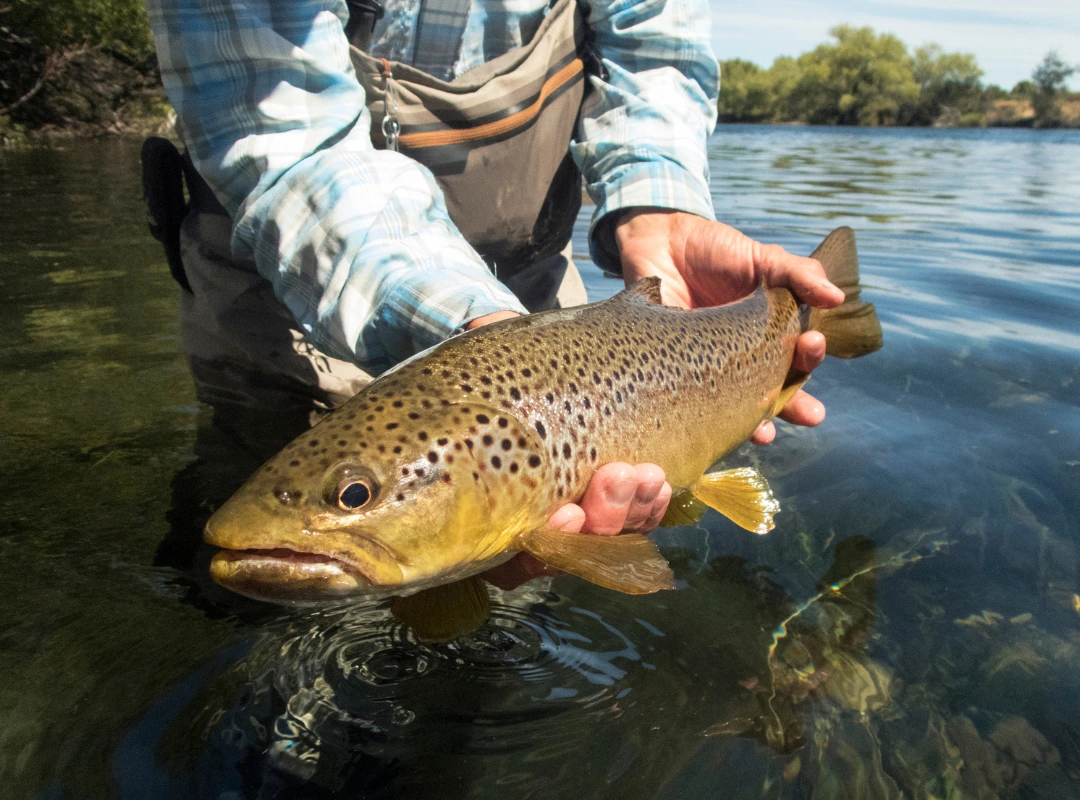
Summer is also a strong season for chasing large trout with streamers, particularly early and late in the day or during low-light conditions. The "Woolly Bugger" is one of the most versatile flies in any box, fished with a slow strip to imitate a leech, baitfish, or large aquatic insect. Its simple design and marabou tail give it lifelike movement in the water, making it a dependable choice when targeting brown trout holding in undercut banks or shaded pools. Streamer fishing in summer works especially well after a rain event, when slightly stained water gives predatory trout more confidence to chase a larger meal.
Early morning hours generally bring the coolest water temperatures and the most consistent surface activity. This makes it a strong window for dry fly fishing. Midday heat pushes fish into deeper, shaded water, where nymphs and streamers become more productive.
As evening approaches, caddis and mayfly hatches frequently return. This brings the fish back to the surface for another feeding before dark. Building a rotation of nymphs, dry flies, and streamers into a single day of fishing lets you stay adaptable as conditions change from sunrise to sunset.
A handful of "Elk Hair Caddis" and "Chubby Chernobyl" patterns in a few sizes, some small "Blue Winged Olive" imitations, a few "Royal Wulffs" and "Fat Alberts" for attractor fishing, a selection of natural-colored nymphs, and a couple of "Woolly Buggers" in black and olive cover the majority of situations found on summer water.
Carrying flies in a range of sizes, particularly smaller patterns for low water later in the season, gives you more options as hatches shift throughout the summer months.

Choosing the best trout flies for summer comes down to:
Fly fishing during these months offers some of the richest hatches and most active feeding windows of the year. Having the right flies on hand turns a quiet stretch of river into a productive one. With careful observation, patience, and a solid rotation of proven patterns, summer trips consistently produce strong results for trout fishing.
If you want expert guidance putting these patterns to work, you can call Frontier Anglers TN and book a guided day on some of the best summer trout water in the region.
Fly fishing trips are available on the Cherokee - Holston River, Douglas - French Broad River, Norris - Clinch River, Little River, Pigeon River, and Caney Fork River.
Call at 865-719-0227 and book your trip today, and experience summer trout fishing at its best.