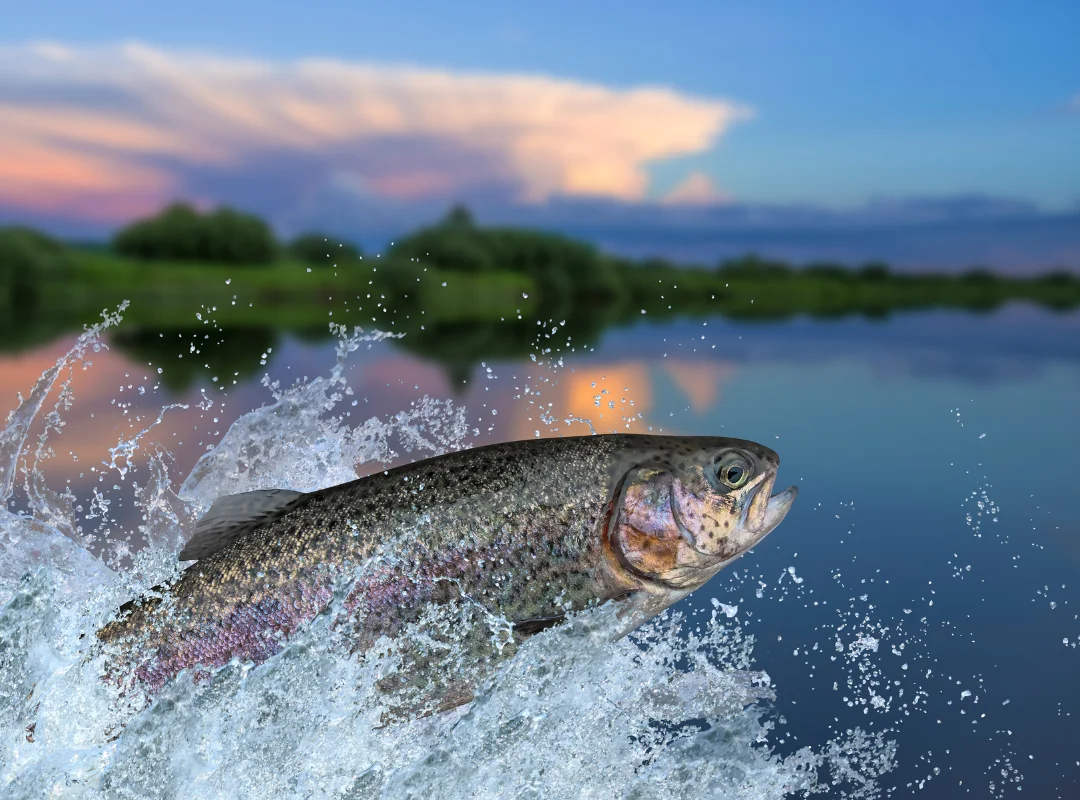
Success in dry fly fishing starts with observing the behavior of trout. When you see a fish rising to the top of the water, it is generally a clear sign that a hatch is occurring.
This visual style of fly fishing is positively rewarding because you can see the strike happen in real time. To keep these lures on top, dry flies float due to the materials that are used in their construction.
Traditional patterns mostly use stiff hackle feathers that wrap around the hook shank in order to create some surface tension. These feathers act like tiny legs, supporting the
weight of the hook and giving some drag-free drift across the water current.
Buoyancy also comes from deer hair and hollow fibers. Take the elk hair caddis, a fly box essential, which rides high on the water, mimicking an insect fluttering or skating across the surface. These dry flies imitate adult terrestrial insects or, sometimes, aquatic bugs that are drifting into the stream.
When there is no visible surface activity,
wet fly fishing becomes the primary strategy. Most of what a fish eats is found in the deeper water, where subsurface flies drift along the bottom or in the middle of the water column.
Unlike their floating counterparts, wet flies are basically tied with materials that absorb moisture and sink quickly.
Many patterns use soft hackles that move and pulse in the current, mimicking the gills or legs of emerging insects.
Using wet and dry flies requires a shift in how you basically read the river. While a dry fly needs to sit quietly on the film, a wet fly generally benefits from a little movement or a swing through a riffle. This technique is great and targets the stages of life of incest that occur before they reach the air.
When you pick the right fly selection for the depth of the water, you can reach trout that are staying low to avoid bright light or predators.
Also in the early morning, before the sun has warmed the water enough to trigger a hatch, these sunken patterns are often the most reliable way to find a bite.