What Dry Fly Patterns Match Tennessee's Major Summer Hatches

nymphing techniques for tennessee freestone streams fly fishing

During the summer months in Tennessee, major trout streams and tailwaters experience prolific hatches of whiteflies, Sulphurs, tiny tricomes, Caddis, and active Terrestrials. Matching these summer hatches requires specific dry fly profiles and sizes to fool selective fish. Learn more.

Why Summer Hatches Matter for Fly Selection

Summer brings some of the most consistent insect hatches of the year across Tennessee. As water warms into a comfortable range, aquatic insects move through their life cycle on a predictable schedule. They hatch in the mornings and evenings when temperatures are mildest. This rhythm is why most anglers consider summer one of the better stretches for dry fly fishing, provided the right pattern is on the end of the line when fish start rising.

Caddis Hatches & the Elk Hair Caddis

Caddis flies are among the most abundant insects on Tennessee's trout waters through summer. Caddis hatches can bring fish to the surface in impressive numbers on the right evening.

The elk hair caddis remains the standard pattern for matching this hatch. Its buoyant deer hair wing keeps it riding high through repeated casts. Because caddis generally hatch in bursts rather than a slow trickle, having a few sizes of elk hair caddis on hand, along with a caddis pupa pattern fished just under the surface, is helpful. This covers both the bugs trout see as they emerge and the adults skittering across the water once they take flight.

Pale Morning Duns & Sulfur Activity

Pale morning duns become one of the more reliable mayfly species trout feed on during daylight hours as summer settles in. These pale yellow insects generally hatch in the late morning to early afternoon, giving you a predictable window to plan around.

guided fly fishing trip with experienced fishing guides
caney fork fly fishing using effective nymphing methods
Closely related to the sulfur hatch that carries over from late spring, pale morning duns call for similar patterns in smaller sizes as the season progresses.
A parachute Adams tied with a pale yellow or green body works great during this stretch, since its visible post makes it easy to track on faster water.

Yellow Sallies & Early Summer Stoneflies

Yellow sallies show up during early summer, particularly on Tennessee's mountain streams. These small stoneflies bring trout to the surface with an eagerness that surprises you if you are unfamiliar with the hatch.

A yellow-bodied dry fly, fished with a natural drift along current seams and near overhanging structure, produces great results during this window. Because yellow sallies tend to hatch sporadically rather than all at once, blind fishing, likely holding water with this pattern, usually works as well as targeting visible rises.

Blue-Winged Olives Return in Cooler Stretches

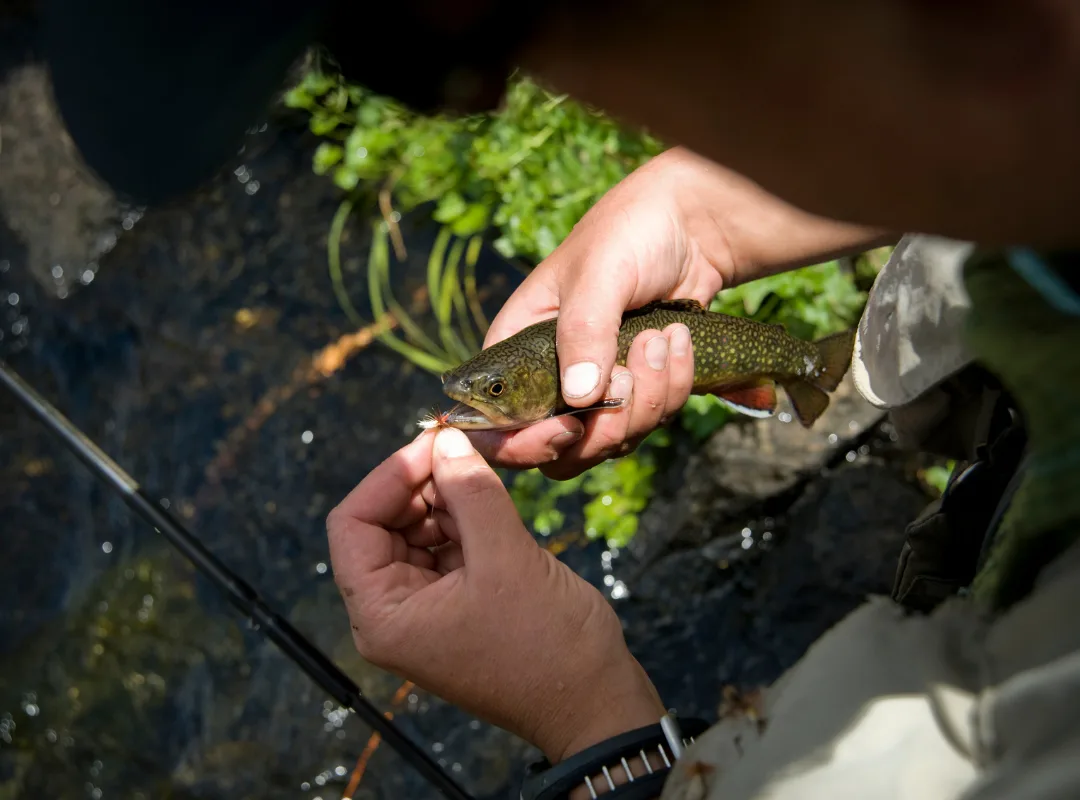
While blue-winged olives are best known as an early spring hatch, they make a return appearance during cooler stretches of summer (especially at higher elevations). Brookies respond to these small mayflies the same way they do earlier in the year. They rise steadily during the hatch window and usually ignore larger patterns in favor of something closer to the natural insect's size and color.
Carrying a few blue-winged olive patterns through the summer season, even when they aren't the primary hatch, pays off on the days when the weather cools, and this insect becomes active again.

Where to Fish These Patterns

The South Holston remains the most productive tailwaters in the state for matching summer hatches. This river is known for strong caddis activity and pale morning dun emergences tied to consistent water releases.
Trout in these rivers, including brown trout that grow selective as the season progresses, respond well to fly selection and a natural drift. Tennessee's smaller mountain streams offer a different kind of fishing, with yellow sallies and caddis producing strong action in faster water where trout have less time to inspect a fly closely.

Using a Dry Dropper Rig for Better Results

You will find success if you are pairing a visible dry fly with a dry dropper rig, running a zebra midge or pheasant tail beneath the surface pattern. This setup covers both the hatch happening on top and the subsurface activity trout rely on between hatches. This increases the odds of a strike even during slower stretches of the day.

On rivers holding large trout, this combination gives fish two very different presentations to consider, generally drawing strikes from fish that wouldn't commit to a dry fly alone.
clinch river fly fishing experience with a professional guide

How to Build a Practical Summer Fly Box

- A well-rounded summer fly box doesn't need to be complicated.
- A few sizes of elk hair caddis
- A handful of pale morning duns and yellow sallies
- A couple of parachute Adams in varying sizes
- A small selection of blue-winged olives

These cover nearly every situation an angler will run into on Tennessee's summer waters.

Rounding out the box with zebra midges and pheasant tails for dry dropper setups ensures there's always a backup when surface activity slows during the middle of the day.

Matching Tennessee's summer hatches is about understanding which insects are active on a given river at a given time and having a small, reliable selection ready to match them.

From the caddis hatches on tailwaters to the yellow sally activity in mountain streams, summer months in Tennessee offer some of the most rewarding fly fishing conditions of the year if you are willing to pay attention to what's happening on the water.

Book Your Fly Fishing Trip with Frontier Anglers TN

Call Frontier Anglers TN to book a guided trip during Tennessee's best summer hatch activity. Trips are available on the Little River, Pigeon River, and Caney Fork River, as well as on the Cherokee-Holston River, Douglas-French Broad River, and Norris-Clinch River.

Book your trip today and put the right fly in front of the rising trout. Call us at 865-719-0227.
Frequently Asked Questions

Q1. What are some good dry fly patterns for trout fishing?

A: Parachute Adams, Elk Hair Caddis, and Pale Morning Dun patterns are reliable choices that cover most brookies' hatches through the warmer months.

Q2. How to match the hatch in fly fishing?

A: Matching the hatch means observing the insects on the water and selecting a fly close in color, size, and shape to what trout are actively feeding on.

Q3. What color fly is most effective for catching trout?

A: Olive, tan, and yellow tend to be the most consistently effective colors, since they closely resemble the natural insects trout see most often.

Q4. What color attracts trout the most?

A: Natural, subdued colors like brown and olive tend to attract trout best, closely matching the insects and baitfish found in their environment.

Q5. What are some classic dry fly patterns?

A: The parachute Adams, elk hair caddis, and pheasant tail nymph are considered classic patterns that remain effective across countless trout waters.

CHECK OUT

Our Supporters

©frontier anglers tennessee ALL RIGHTS RESERVED.