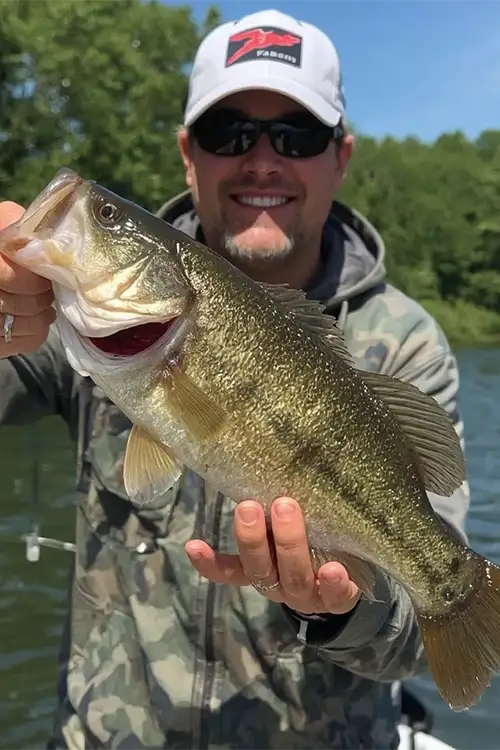
When you fly fish in Tennessee, the conversation often revolves around trout. But for anglers who love a hard-hitting fight, there’s another species in Tennessee rivers: the smallmouth bass. For good reason, these fish are often called the pound-for-pound champions of freshwater. If you’ve ever wondered what the best time of year is to catch smallmouth bass on a fly in Tennessee, we have the right answer for you. Read on!
Understanding Tennessee's Smallmouth Bass
Unlike largemouth bass that prefer still waters and weedy cover, river smallmouth thrive in moving water. They love the current and the kind of rocky habitat found in many Tennessee rivers. While they share some similarities with largemouth bass, Tennessee smallies have their own unique rhythm.
Water temperature is the main driver of their behavior, so
reading the water is the most important factor for catching fish. Smallmouth bass are most active when water temperatures are between 60°F and 75°F. Below 50°F, their metabolism slows dramatically, and they move into deeper water. Hence, they are much harder to catch on a fly. Understanding this temperature window is the first step to planning a successful trip.
Catch Smallmouth Bass in Spring
As the water warms, fish begin moving from their deep winter holding spots into shallower areas to feed and prepare for the spawn.
Early Spring (Late March to April)
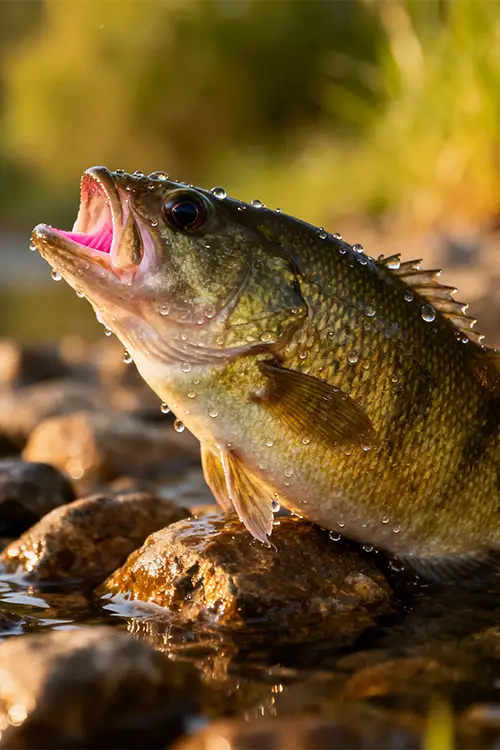
As water temperatures climb into the low 50s, smallmouth begin their migration. This pre-spawn period is a prime time for hunting big fish. Bass are hungry after a long winter and are actively feeding on crayfish and baitfish.
The
spring season is for slow-rolling streamers and crayfish patterns near the bottom. Focus your efforts on transition areas where deep pools drop off into shallower runs. A dead drift presentation with a weighted fly can be incredibly effective, mimicking an easy prey item.
The Spawn (Late April to Early June)
When water temps consistently hit that magic 60°F to 65°F range, the spawn will begin. Male smallmouths move into shallow water, often just two to six feet deep. They build nests on gravel bottoms. During this time, they become extremely territorial and will aggressively strike anything that comes near their nest.
While some anglers prefer not to target fish on their nest, it’s an opportunity to catch some of the biggest smallies of the season. Sight-fishing with small, dark streamers or crayfish patterns can be very productive. Be aware that the bite can be subtle; sometimes they just pick up the fly to move it away. Once the females lay their eggs, they retreat to deeper water to recover, while the males guard the nest and the fry.
Catching River Smallmouth Bass in Summer
The
summer season kicks their metabolism into high gear, and they feed aggressively. This is the season of explosive surface strikes and fast-paced action.
Early Summer (June to Mid-July)
Post-spawn fish are hungry and looking to regain weight. This is when summer patterns really start to take shape. You’ll find fish holding in current seams, behind boulders, and along shaded banks. This is the best time for topwater action.
The best hours are often early morning and late evening when the light is low, and baitfish are most active. There’s nothing quite like watching a big smallmouth explode on a surface fly.
Late Summer (Late July to August)
During the hottest parts of the day, they tend to move into deeper, cooler water or seek refuge in heavily shaded areas. The surface bite may slow down mid-day.
A sinking line and baitfish patterns become your best friends. Let your fly sink into the deeper pools and retrieve it with short, erratic strips to imitate a fleeing baitfish.
Focus on the head of pools where oxygenated water enters or the deepest pools you can find. The big ones will be down there, waiting for an easy meal to drift by.
The Big Feed Before Winter in Fall
For many fly anglers, fall offers the best fishing of the entire year, combining aggressive fish with beautiful scenery.
Early to Mid-Fall (September to October)
With water temperatures falling back into the ideal 60°F–70°F range, smallmouth move back into shallower areas and feed heavily. They are trying to bulk up for the cold months ahead. This is another excellent window for streamer fishing. Large baitfish patterns are highly effective because bass are hunting for substantial prey.For many fly anglers, fall offers the best fishing of the entire year, combining aggressive fish with beautiful scenery.
Winter
Fly fishing in winter is not impossible, but it requires a different approach. The key is to fish slow and deep. A dead drift presentation is essential. Use small, subtle nymph patterns or tiny streamers and get them right on the bottom.
The takes will be incredibly light, often feeling like a faint tick or just dead weight on the end of your line. This is a technical game for patient anglers who are happy to land just one or two fish.
Gear & Productive Flies for Tennessee Smallies
Your
fly fishing gear doesn't need to be overly complex. A 6- to 8-weight fly rod is perfect for casting the larger flies needed for smallmouth bass.
A weight-forward floating line will cover most situations, but having a sink-tip or full-sinking line for summer and winter is a huge advantage for getting your fly down into the water column.
As for productive flies, a well-rounded box should include:
1. Topwater: Poppers and sliders (like the Boogle Bug or Dahlberg Diver).
2. Streamers: Clouser Minnows, Deceivers, and articulated baitfish patterns.
3. Bottom Dwellers: Crayfish patterns (like the Clouser Crayfish) and sculpin imitations.
Final Thoughts
So, what is the best time of year for smallmouth bass fly fishing in Tennessee? If you’re after numbers and aggressive topwater strikes, the early summer months from June to July are hard to beat. Ultimately, you can catch smallmouth bass in Tennessee nearly year-round if you adapt your tactics to the season. Each season offers a unique experience, and the thrill of feeling a big smallie on the end of your fly line makes every cast worth it.
Fish Smarter & Book Your Trip with Frontier Anglers TN
You don't have to spend decades learning fly fishing the hard way. That's where
Frontier Anglers TN comes in. We've made the mistakes, we've solved them, and now we pass that knowledge directly to you. Our
fly fishing guides don't just row the boat or walk you to a good stretch of river. So if you're ready to stop chasing mistakes and start chasing fish,
book your trip with Frontier Anglers TN today.