What Casting Skills Should I Practice Before My First Guided Trip?

What Casting Skills Should I Practice Before My First Guided Trip

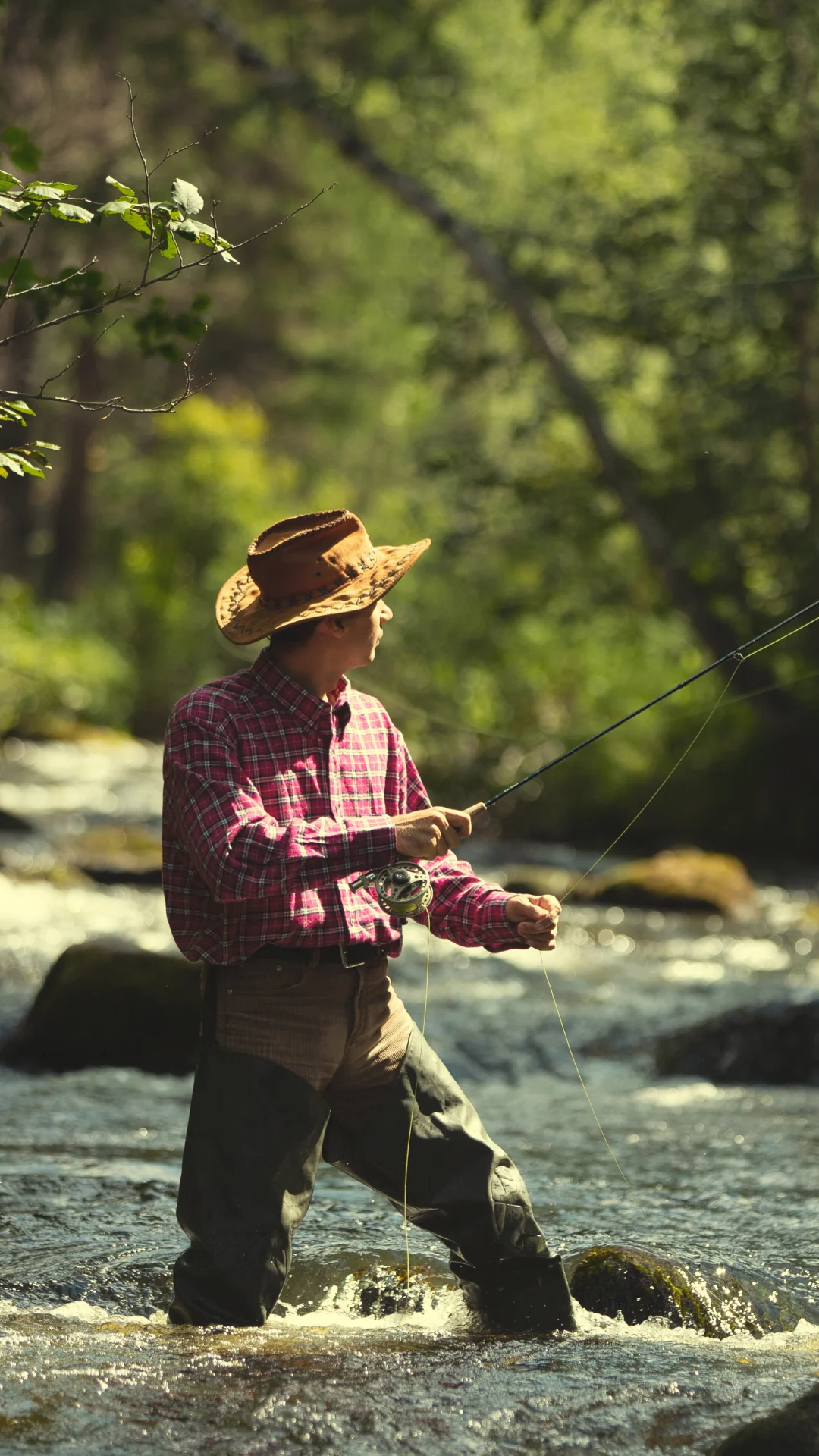
Practice four skills before your first guided trip: an accurate overhead cast, a roll cast, a sidearm cast, and line control on the water. You do not need to throw extreme distances to catch fish; success usually comes down to hitting targets accurately between 20 and 40 feet. Practice these techniques so you can quickly place your fly right where you spot a fish.
‍

Why Accuracy Matters for Catching Fish

Casting takes years to perfect in fly fishing, so no guide expects a perfect cast. The anglers with the most success aren't the ones with the longest cast, but the ones who put the fly where the guide points.

Your fly must land in the fish's strike zone, usually a seam behind a boulder or log or under overhanging brush. A 30-foot cast right at the target catches more fish than a 60-foot cast into open water. So it's more about accuracy than total distance.
Practice With Targets in the Backyard

Set a hula hoop or bucket at 20, 30, and 40 feet in a backyard or park, and start practicing at the closest one. Move back only after you land the fly in the hoop five times in a row, since short-range accuracy builds the timing every longer cast needs. Before you cast, choose a spot clear of trees and people, and check behind you. Your back cast travels as far behind you as your forward cast travels in front of you.

You don't need to spend money on new gear, since a piece of yarn tied in place of a fly works just as well. Three or four 20-minute sessions in the two weeks before your trip build more muscle memory than one long session. Film a half-dozen takes and watch the videos back, or ask someone to watch your loop. Like a golf swing, a fly cast depends on timing, not strength.

Overhead & Forward Casts

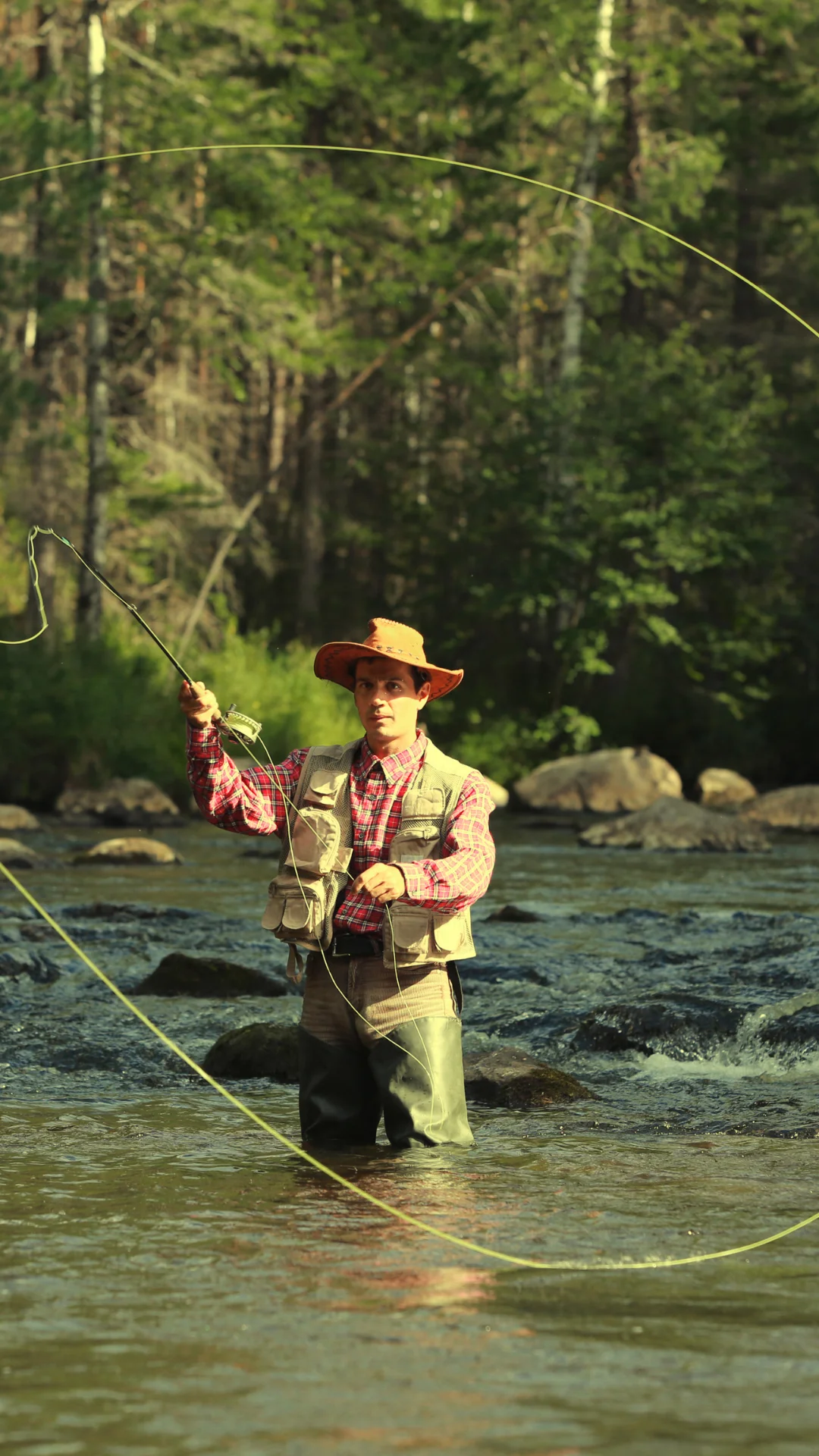
A smooth overhead cast is the foundation for fishing dry flies, nymphs, and streamers. Lift the rod, stop on the back cast, and start the forward cast when the fly line straightens behind you. Turn your head and watch the back cast to learn that pause.

Keep the strokes compact, and move the rod tip along a straight path before stopping. This forms a tight loop that improves accuracy and line control. It also results in consistent turnover of leaders, so the fishing leader lands straight and flat on the water.
‍
Keep the motion natural and smooth, because pushing harder only makes the loop worse. Breaking the wrist and rushing the back cast are two common fly fishing mistakes beginners make.
How to Practice Casting at Home
What Time of Day Are Smallmouth Bass Most Active

Roll & Sidearm Casts

The roll cast is useful when trees or high banks leave no room behind or overhead. To execute it, raise the rod slowly until the line hangs beside you in a "D-shaped" loop, then push the rod tip forward, down, and across the water. This technique also straightens out slack lines on the water to prepare you for your next standard cast.

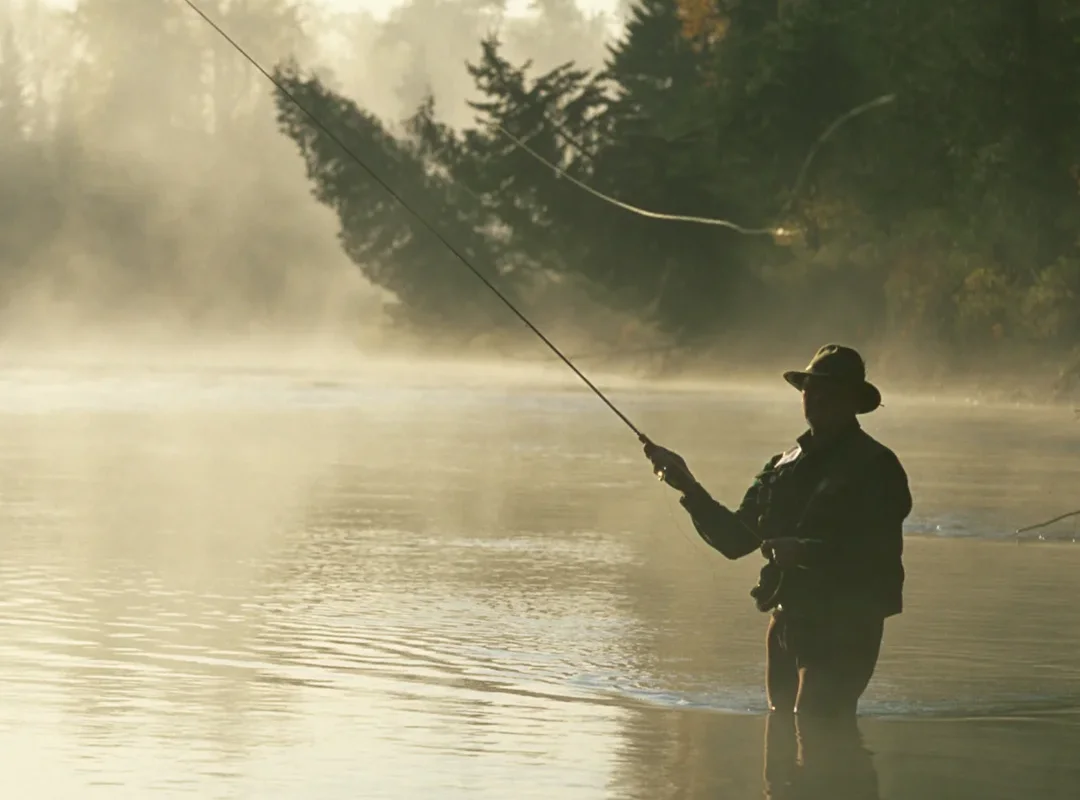
The sidearm cast uses a horizontal rod angle. Tilting the rod sideways keeps your fly low to skip under overhanging branches and stay beneath high winds. On a drift boat, casting sideways helps keep the traveling hook safely away from passengers and your guide.
‍

Fly Line Control & Mending

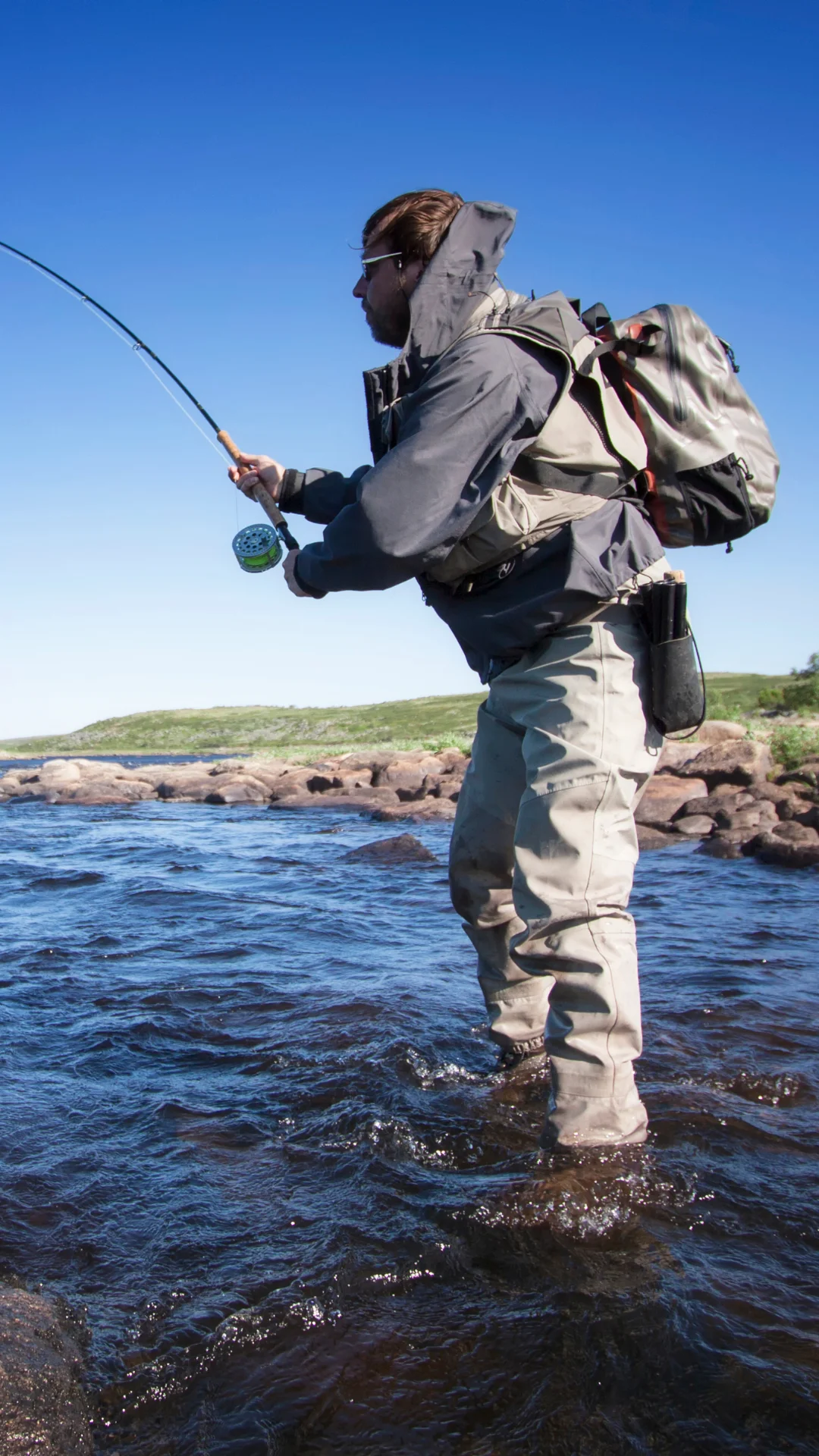
Line control affects where the fly lands and how it drifts. Keep the fly line pinned under the index finger of your rod hand whenever you aren't casting.

Good line control ensures a drag-free drift, which is important for catching trout because natural bugs float at the speed of the current. Mending, or flipping the belly of the line upstream, keeps the fly on a dead drift, and a few inches of slack at the end of the cast adds more drift time. Drag shows fastest when fishing dry flies or a dry dropper rig.

Stealth & Positioning

Trout are extremely wary, and short casts put you close enough to spook them. Approach the river like you're hunting: move slowly, stay low, and keep your shadow off the water. Being quiet and observant increases catch rates, so watch for rising birds and birds picking bugs off the surface.

Focus on quiet presentations, since a fly line slapping the water sends trout to cover. Standing across and slightly downstream of a fish lets you cast upstream without lining it. Learning how to read water for fly fishing shows where to stand, and on a float trip, listen to your guide's calls.
‍

Frontier Anglers TN: Guided Fly Fishing Trips

Frontier Anglers TN runs guided float trips in drift boats and rafts on the Cherokee-Holston, Douglas-French Broad, Norris-Clinch, Little, Pigeon, and Caney Fork rivers, as well as trips in the Great Smoky Mountains National Park.

‍Our guides are USCG-licensed captains certified in CPR, first aid, and AED training, and they work with fly fishermen of all experience levels. Book your trip today and put your practice to work. Call us at 865-719-0227, email pheasanttail12@live.com, or reach us in Maryville, TN.
How Do Smallmouth Bass Behave During Midday

Frequently Asked Questions

Q1. How can I practice casting at home?

A: Set hula hoops or buckets at 20, 30, and 40 feet in an open yard or park. Tie yarn to your leader instead of a hook, check behind you, and cast at the closest target first.

Q2. How do I get good at fly casting?

A: Practice in short, frequent sessions and focus on timing: pause until the line straightens behind you before each forward cast. Filming your casts and taking a lesson from a guide speeds up the learning process.

Q3. How do I get better at casting with any rod?

A: Whether you fish with fly or spinning gear, accuracy comes first. Practice at close targets until you hit them consistently, then add distance. Regular 20-minute sessions build more muscle memory than one long session.

Q4. What are the most common casting mistakes?

A: The most common mistakes are rushing the back cast, breaking the wrist, and pushing too hard on the forward cast. Each one opens the loop, stops the leader from turning over, and costs accuracy.

Q5. Do I need a fly to practice casting?

A: No. Tie a short piece of bright yarn to the end of your leader. It behaves like a small fly in the air, shows where your cast lands, and keeps a hook out of your yard.

CHECK OUT

Our Supporters

©frontier anglers tennessee ALL RIGHTS RESERVED.