To replace the fishing line of a spinning reel, you need to remove the old line from the reel's spool, tie your new line to the arbor using an arbor knot, close the bail, and start reeling while keeping steady tension so the line lies tight. Let's learn more in detail.
Old fishing line does not just look worn; it performs worse in every measurable way. Monofilament develops line memory, curling off the reel in stiff coils that reduce cast distance. This increases the chance of a bird's nest or wind knot on your next trip.
Fluorocarbon lines hold up longer than monofilament but weaken with repeated stress and UV exposure. The braided line lasts the longest, but even it develops surface abrasion. It can fray near the first guide after heavy use. Catching more fish starts with giving yourself every advantage, and a fresh line on a spooled spinning reel is one of the simplest upgrades you can make before you go fly fishing.
Before you fill anything, pick the right fishing line for the job. Monofilament is the easiest way to start, as it is stretchy and inexpensive. Fluorocarbon lines are nearly invisible underwater, making them a strong choice for trout fishing.
The braided line offers the smallest diameter for its strength. It is perfect when you need to cast long distances or fish heavy cover. You should always match your line weight to your rod and reel rating. Putting too much line or the wrong diameter on a spinning reel causes problems from the first cast.
Also, check the spool lip on your reel; it usually shows the recommended line weights and capacity right on the reel.

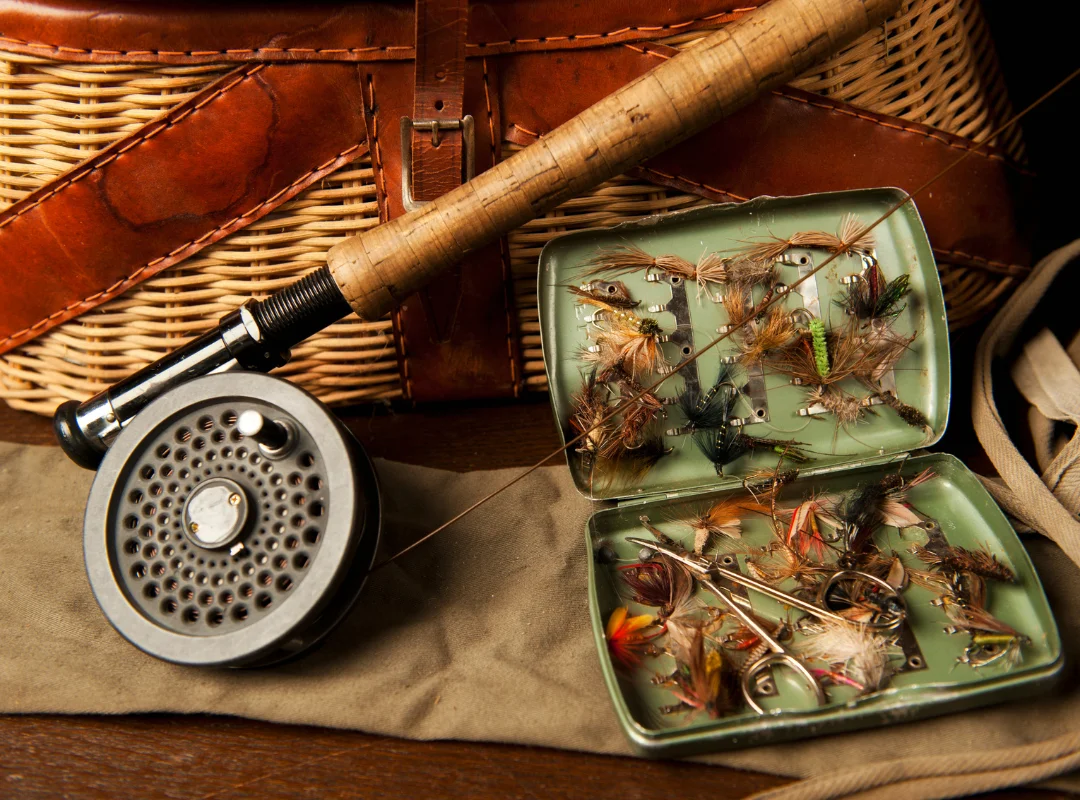
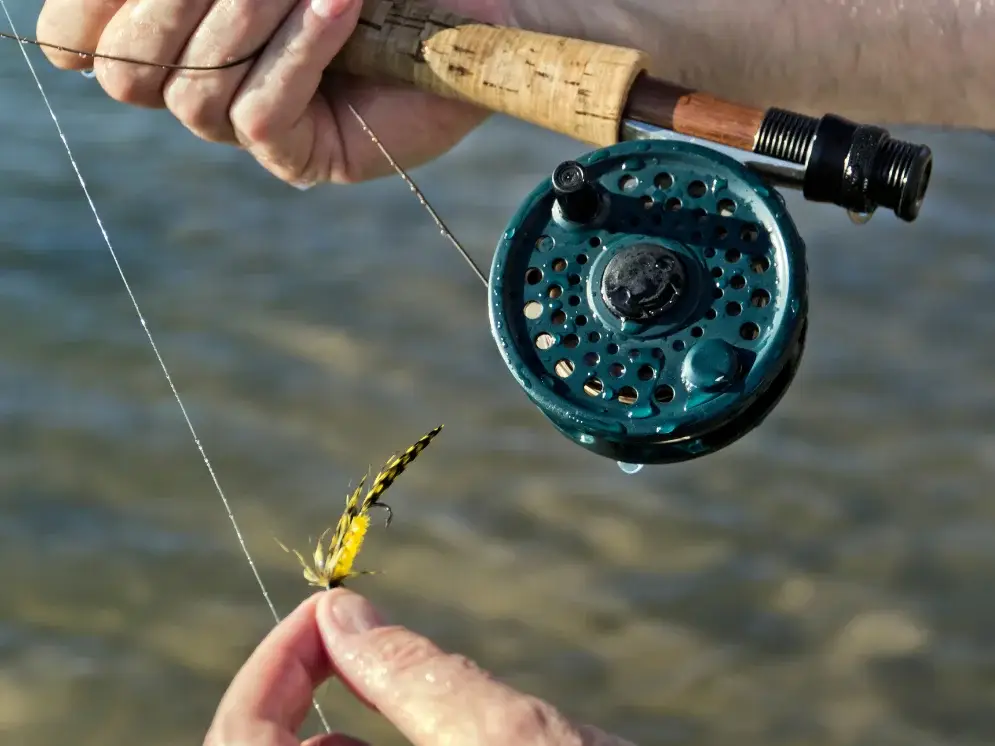
Start on a flat surface with your rod assembled and the reel attached. Thread the line through the first guide on the rod before attaching it to the reel's spool.
Have your filler spool of new line nearby, label facing up. The reason the label facing up matters is that it tells you which direction the line is wound on the filler spool. Matching that direction to your reel is the single most important step in avoiding line twist.
Open the bail on your spinning reel and tie the new line to the arbor, the center post of the reel's spool, using an arbor knot.
An arbor knot is simple:
Line twist is the number one reason fly fishing anglers end up with a bird's nest mid-cast or a wind knot. To spool evenly and avoid this, you should lay the filler spool flat on a flat surface with the label facing up.
Remember that as you start reeling, the line should spin off the filler spool in the same direction it is going onto your reel's spool.
Watch the line as it comes off. If it starts to twist and loop in the air between the filler spool and your rod guides, flip the filler spool over and continue.
As you wind and hold the fishing line between your fingers, apply light pressure to the first guide. This keeps tension on the line as it lies on the reel, which is what makes it spool evenly and sit tight without loose wraps.
A loose line on the reel leads to line burying under itself during a cast, which is another fast path to a bird's nest.
Just keep reeling stable and maintain that tension all the way to the spool lip.
Fill the reel's spool to within about an 8 of an inch of the spool lip. Getting close to the edge without going over gives you maximum cast distance while keeping the line from jumping off in loose coils.
Using a thicker monofilament as monofilament backing under braid? Fill the arbor with just enough monofilament to build up the base. After that, you should tie on your braid using a uni knot and fill the rest of the reel with a braided line.
The uni knot is a good choice for joining braid to monofilament backing. And the reason is that it sits firmly and does not slip under drag pressure.
Once the reel is spooled, stretch a length of line out and watch for any residual twist. If the line curls back on itself in tight loops, there is still a line twist built into the spooled line.
One fix is to cast the line out behind a slow-moving boat and drag it through the water for a minute. The resistance will pull most of the twist out.
On a flat surface, you can also run the line through your fingers a few times with some pressure to straighten it before your first cast. Check the drag on your reel and set it properly for the fish you are catching. A properly set drag on a freshly spooled spinning reel is far less likely to hit a pressure spike that snaps the line at a critical moment.
One thing that separates a baitcasting reel setup from a spinning reel setup is that a spinning reel is far more forgiving if you are a beginner, but it still rewards attention to detail.

Knowing how to replace the fishing line of a spinning reel is a skill that pays off every single trip. Fresh line, properly spooled with stable tension and the right direction matched between your filler spool and reel. All this gives you cleaner casts and a stronger connection to every fish you hook.
Do it before the season starts, do it after a tough day on the water, and do it any time your line feels weak, stiff, or loaded with line memory. It is one of the simplest things you can do to fish better.
Frontier Anglers TN puts you on some of the finest fishing water in Tennessee because we know every run, every hatch, and every stretch worth fishing. Call us today and plan your next trip on world-class Tennessee rivers, including the Cherokee–Holston River, the Douglas–French Broad River, Norris–Clinch River, Little River, Pigeon River, and Caney Fork River.
Book Your Trip with Frontier Anglers TN today.