How to Attach Fly Line to Backing

How to attach fly line to backing comes down to two main methods:

  • Tying a nail knot directly between the backing and the fly line
  • Using a loop-to-loop connection with a welded loop already built into the end of the fly line.

Both methods create a secure connection between your fly line backing and the running line, giving you the length needed to fight a large fish and the strength to keep everything connected on the reel spool. Let's know more.

Why Backing Matters in Fly Fishing

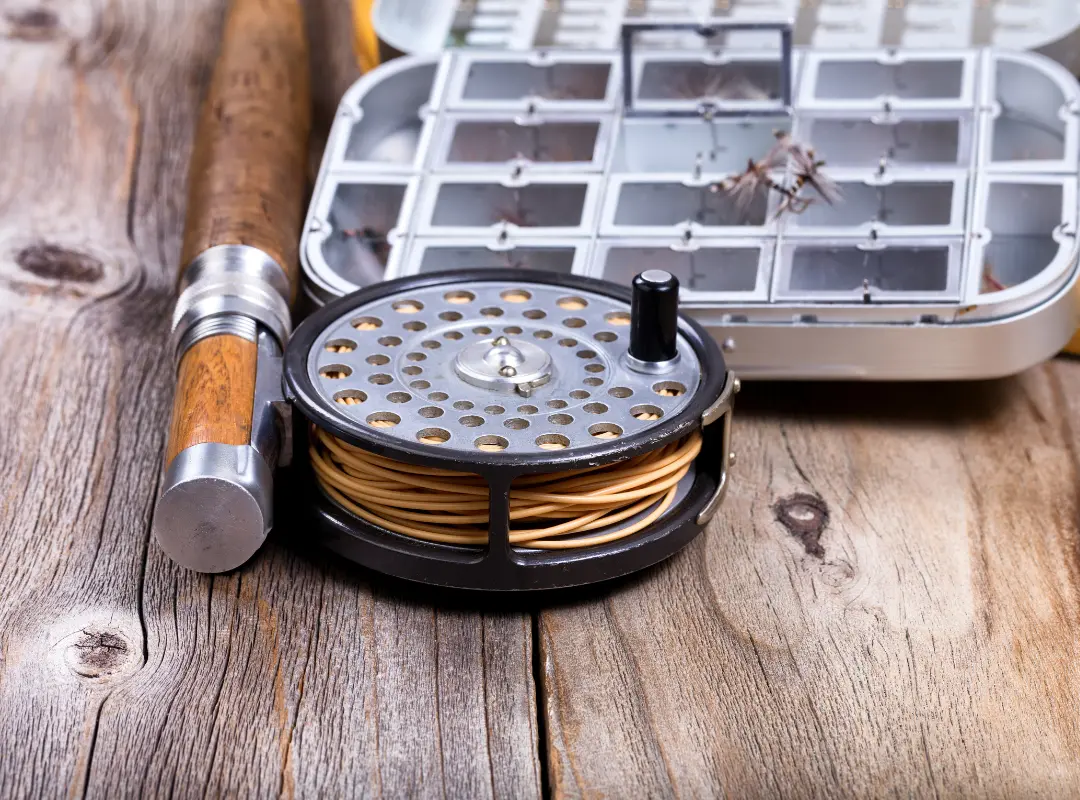
Backing serves as the foundation of a proper fly-fishing setup, filling the line spool and giving fish like smallies and brookies somewhere to run. Without backing, a fly line sitting directly on a bare arbor would sit in tight coils and wear out quickly. It will also leave no reserve if a large fish makes a hard run.

Backing is generally made of gel-spun material or braided Dacron, chosen for its thin strength and diameter relative to its size, which lets you pack a substantial length onto a reel spool without adding much bulk.

How to Attach Backing to the Reel

The first step in the process is attaching backing to the arbor of the reel itself, which is done with an arbor knot. This knot is built by:

  • Wrapping the tag end of the backing around the arbor
  • Tying an overhand knot around the standing line
  • Then, tying a second overhand knot at the very end of the tag

When pulled tight, the first knot slides down and jams against the second, locking the backing in place on the spool. Once secured, the backing is wound onto the reel under steady tension, keeping the wraps tight and even so the line lies flat and consistent across the line spool.
What is the Best Way to Attach Fly Line to Backing
Frontier Anglers TN Trout Fishing Trips

How to Create a Backing Loop

Many anglers prefer to finish the backing end with a backing loop, which makes future connections to the fly line easier. A bimini twist is one of the strongest ways to build this loop, as it doubles the line back on itself. This creates a twisted section that retains close to full line strength.

If you want a simpler option, a triple surgeon's knot tied in a doubled section of backing also creates a dependable big loop (without the extra steps of a bimini twist).

Either method results in a strong loop connection point that can be joined to a matching loop on the fly line.

How to Attach Fly Line to Backing

When it comes to fly-line-to-backing connections, two methods dominate among anglers.

Nail knot

A classic connection that wraps the backing line directly around the coating of the fly line, creating a low-profile, permanent bond. This knot is traditionally tied with the help of a small tube or nail (hence the name), and it produces a connection thin enough to pass smoothly through the rod guides.

The nail knot remains a dependable choice, particularly for older reels or fly lines that were not manufactured with a factory loop.

Loop-to-loop connection

This method is possible because most modern fly lines, including those from brands like Scientific Anglers, come from the factory with a welded loop at the back end.

To use this method, the backing simply needs its own loop, created through a surgeon's knot or bimini twist as described above, and the two loops are interlocked and pulled snug to form a fly line loop connection.

This setup is easy to inspect and simple to change out if a new fly line needs to be swapped onto the same backing down the line.

Other Useful Knots in the System

While the arbor knot and loop connections handle the reel side of the setup, a few other knots come into play elsewhere in the system.

The Albright knot

This is a strong choice for joining lines of different diameters, such as connecting backing directly to a fly line without a loop. It remains a reliable choice if you prefer a knot-based connection over a welded loop system.

The improved clinch knot:

This is one of the most widely used knots for tying flies directly to tippet, prized for its simplicity and consistent strength (across various line sizes). Though this knot is used at the fly end of the setup, it is worth mentioning as part of a complete rigging system from rod tip to reel.

Step-by-Step Summary

Building the full system starts with tying an arbor knot to secure the tag end of the backing to the reel spool. This is followed by winding the backing on with firm, even tension.

Next, a loop is formed at the working end of the backing using a triple surgeon's knot or a bimini twist.

From there, the loop is connected to the factory-welded loop on the fly line using a loop-to-loop connection, or alternatively, an Albright knot or nail knot is tied directly between the two lines (if no loop is present).

Once the fly line is secured, a leader is attached to the front end of the fly line, completing the connection from reel to rod tip.

Do I Need Backing on My Fly Line

How to Bring It All Together

Whether using a nail knot for a direct, low-profile connection or a loop-to-loop system, the goal remains the same: a strong link that holds up when a fish makes a run.

Taking the time to tie these connections carefully, checking each knot before heading out, keeps the entire system ready to perform when it matters most on the water.

Frontier Anglers TN: Trout & Smallmouth Bass Fly Fishing

For anglers who want hands-on guidance rigging their gear and putting these connections to work on the water, Call Frontier Anglers TN and book a guided trip on some of the best trout and smallmouth bass water in the region.

Trips are available on the Cherokee - Holston River, Douglas-French Broad River, Norris-Clinch River, Little River, Pigeon River, and Caney Fork River. 

Book your trip today and fish with confidence knowing your gear is set up right. Contact us today.

Frequently Asked Questions

Q1: What is the best way to attach fly line to backing?

A: A loop-to-loop connection is generally the easiest and fastest method when your fly line has a factory-welded loop. A nail knot, on the other hand, is a strong alternative for lines without one.

Q2: Do I need backing on my fly line?

A: Yes, backing fills out the reel spool and gives a fish room to run. It is a standard part of nearly every fly fishing setup.

Q3: How to rig a fly line for trout?

A: A typical trout setup includes:

  • Backing tied to the arbor
  • A fly line connected via a loop-to-loop or nail knot
  • A tapered leader with tippet attached to the front of the fly line.

Q4: What can I use for fly line backing?

A: Braided Dacron and gel-spun braided lines are the most common materials used for fly line backing. They are chosen for their strength and thin diameter.

Q5: How can I attach a fly line to backing without using a loop?

A: A nail knot or an Albright knot both create a direct connection between backing and fly line (without relying on a loop system).

Q6: How much backing line should I put on my fly reel?

A: Most trout reels use between 50 and 100 yards of backing. The exact amount, though, varies with reel size and the spool's arbor diameter.

CHECK OUT

Our Supporters

©frontier anglers tennessee ALL RIGHTS RESERVED.