The short answer is yes. For anglers who want to land more fish and practice responsible catch and release fishing, they're going to need a fly fishing net. But, it's not only for catching the fish, but also for protection. Drifting a large tailwater? Having the right landing net can change your entire fishing experience. Let's explore why this piece of gear is a must-have and how to choose the right one.
When you first started fly fishing, a net might have seemed like an optional accessory. However, as you target larger trout or fish in faster currents, you're going to need it more than anything else.
Trying to catch a trophy trout with just your hand is difficult and often leads to lost fish right at your feet. A net gives you an extended reach. How? It allows you to scoop the fish before it has a chance to make a final, hook-popping run.
Statistically, anglers using a net land approximately 30-40% more fish than those attempting to hand-land, particularly those dealing with light tippets and small flies. When you have a fish on the line, the margin for error is slim. A net closes that gap.
We see this often: an angler tries to bring a fish close enough to grab by hand, creating a sharp "candy cane" bend in the rod tip. This high-sticking motion is the number one cause of broken rod tips. By using a net with a longer handle or just extending your reach, you keep the rod at a safer angle.
Explore more: Choosing the right fly fishing rod length.
In the past, most fishing nets were made with knotted nylon mesh. While these were durable, they caused some problems for trout fishing.
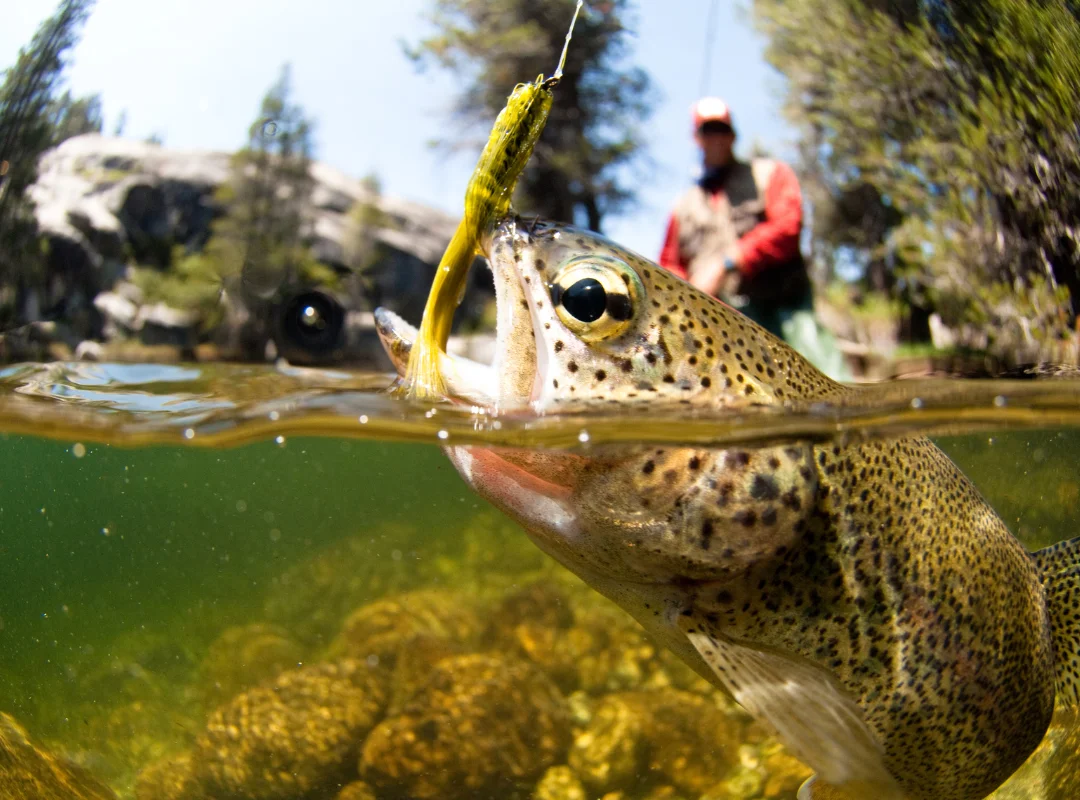

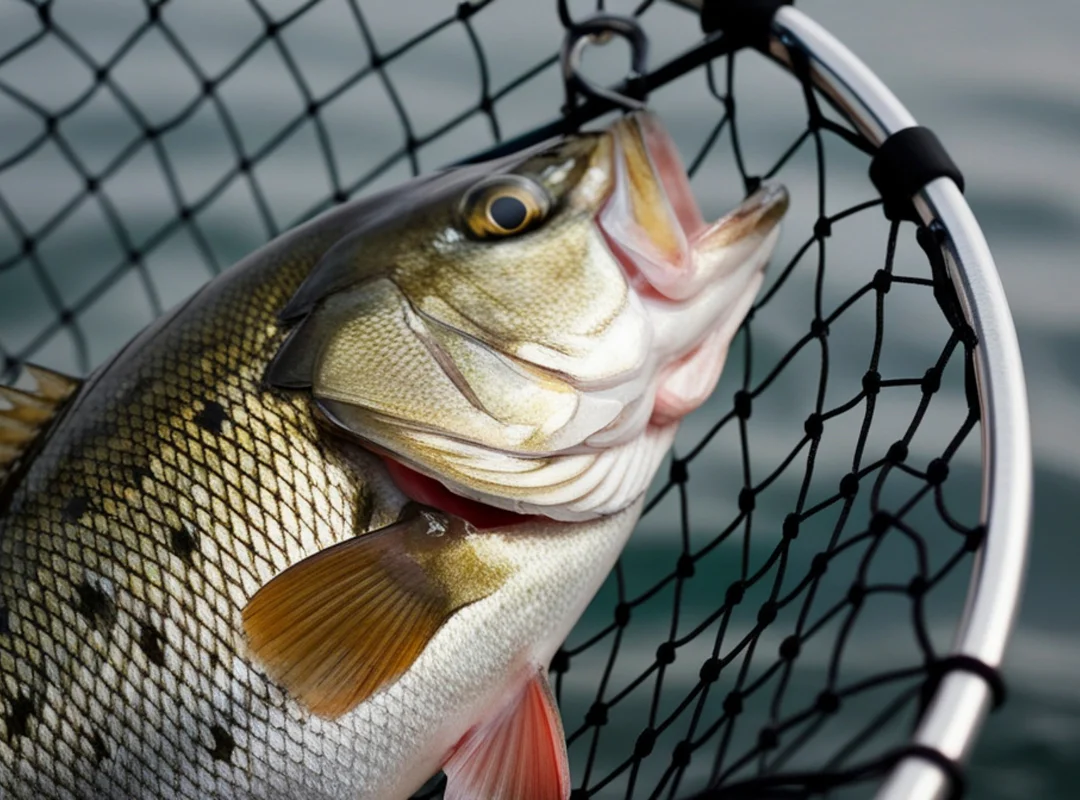
The abrasive knots scrape away the protective slime layer that coats a trout’s body. This slime is important for preventing infection and disease. Plus, nylon bag material is notorious for snagging hooks. If you catch a fish on a double-nymph rig, getting the hooks untangled from a nylon mesh can be a nightmare.
Modern fly fishing nets use a rubber net bag, often made of clear rubber (sometimes called "ghost nets"). This material is smooth and gentle, preserving the fish's slime layer and fins.
Plus, hook removal is significantly easier. Hooks don’t pierce the rubber mesh, meaning you can pop the fly out and release the fish in seconds. If you are serious about catch and release, a rubber net is non-negotiable.
Once you’ve settled on a rubber bag, you need to look at the frame. Here are some of the best options:
They float well if dropped, which is a huge plus for anglers. But, they can be heavier than modern composites and require a bit of maintenance to keep the finish from cracking over time. For many, the aesthetic of wood on a mountain stream is worth the extra weight.
These are durable, lightweight, and can take a beating. They are often less expensive than high-end nets but offer great performance. A good example is a guide net used on drift boats: these are often aluminum because they are tough enough to handle daily abuse and larger species.
A carbon fiber net is way lighter than a wooden one of the same size and stronger than aluminum. If you are hiking miles into the backcountry or carrying a sling pack all day, shaving those ounces makes a difference. Composite materials like fiberglass blends also fall into this category.
Are you fishing for brookies in a trickle of water, or chasing fish in a wide river? Because all these factors matter in choosing the right length.
The handle length is perhaps the most critical feature regarding usability.
A shallow net might work for 10-inch stockies, but a 20-inch wild brown will flop right out of it. Look for a net bag depth that allows the fish to rest fully submerged while you prepare for hook removal. A flat-bottomed net bag is also a great feature, as it allows the fish to lie flat rather than being curled up.

So, do you need a net for fly fishing? Yes, absolutely. Its benefits far outweigh the minor inconvenience of carrying one. It protects both you and the fish. Whether you choose a classic wooden frame or a high-tech carbon fiber model, making a net part of your standard kit is a sign of a maturing angler.
At Frontier Anglers TN, we know that having the right gear is only part of the equation. You need to know where the big fish are hiding. Our expert guides spend every week on Tennessee’s best waters, from the South Holston to the Clinch, dialing in the patterns and locations of trophy trout.
Whether you need help refining your landing technique or just want to explore the best fly fishing in the region, we are here to help. Book a trip with Frontier Anglers TN today, and let’s put that new net to good use! Contact us now!